
Dal Lake Srinagar: Houseboats, Shikara Rides & Complete Travel Guide
Dal Lake in Srinagar is Kashmir's most-visited attraction, known for its houseboats, shikara rides, and floating gardens. Spread across 18 square kilometres with a 15.5 km shoreline, the lake sits at the foot of the Zabarwan mountains. Most travellers spend one night on a houseboat and one morning on a shikara, and that combination alone justifies a Srinagar trip.
At Namastey Yatra Travels, we've booked houseboat stays and shikara rides for hundreds of families since we started operating Kashmir packages, and this guide answers the questions our guests actually ask us before they travel — not generic trivia.
Where Is Dal Lake Located?
Dal Lake sits inside Srinagar city, the summer capital of Jammu and Kashmir, ringed by the Zabarwan hills on three sides. It's a 15–20 minute drive from Srinagar Airport and walking distance from the city's Boulevard Road, which makes it the easiest major attraction in Kashmir to reach without a guide.
You don't need to plan a separate day for Dal Lake — it's the natural base for most of your Srinagar itinerary. Mughal gardens like Nishat Bagh and Shalimar Bagh sit right on its banks, and the lake itself splits into four linked basins — Gagribal, Lokut Dal, Bod Dal, and Nagin — each with a slightly different character.
What Makes Dal Lake So Famous?
Dal Lake is famous for three things found nowhere else in India in this combination: a community that lives on houseboats and floating gardens, shikara boats that double as water taxis and floating shops, and Mughal-era gardens lining its shore. Locals have lived and farmed on its waters for over two centuries.
A few things that surprise first-time visitors:
- The floating gardens (locally called "Rad") aren't a tourist installation — they're working vegetable plots that supply Srinagar's vegetable market every morning.
- Houseboats aren't anchored offshore; they're moored right along the bank, so boarding feels more like entering a houseboat hotel than getting on a boat.
- The lake has its own postal address — a floating post office near Nehru Park, complete with a small philately museum.
- In peak winter, parts of the lake freeze solid enough for locals to walk on, something almost no other Indian tourist lake offers.
- Booking: Houseboats are graded by the J&K Tourism Department as Deluxe, A, B, or C class. Deluxe and A-class units have attached bathrooms, heating, and a private balcony — worth the upgrade in winter.
- What's included: Most bookings include breakfast and dinner cooked on the houseboat itself, served in a wood-panelled dining room.
- The experience: Our guests consistently mention the same thing — the gentle rock of the houseboat at night, the call of vendors selling kahwa (Kashmiri tea) and flowers from shikaras at sunrise, and waking up to a misty view of the lake before the day's tourist traffic arrives.
- Good to know: Houseboats don't move location. The "stay" is static — you go out on a separate shikara for sightseeing and return to the same moored houseboat each night.
- Practical tip: Carry cash in small denominations. Floating vendors sell saffron, dry fruits, and handicrafts directly to your houseboat balcony, and card payments aren't always possible on the water.
- Your shikara man paddles you out from one of the main ghats (boarding points) near Dalgate or Nehru Park.
- The standard route loops past the floating market, the houseboat colony, and Char Chinar — a small island with four chinar (maple) trees planted by Mughal emperor Jahangir.
- Mid-ride, floating vendors will pull alongside selling flowers, jewellery, and saffron — entirely optional, but part of the experience.
- Sunrise and sunset rides cost slightly more but offer the best light for photos, especially over the Pir Panjal range reflected on the water.
- March–May: Mild weather, blooming gardens, fewer crowds than summer.
- June–August: Peak season, lotus blooms, warmest water — also the busiest and most expensive period.
- September–November: Clear skies, autumn colours on the chinar trees, comfortable houseboat stays.
- December–February: Cold, sometimes snow-covered banks; shikara rides reduce, but it's the cheapest and most atmospheric time for photography.
- Decide your houseboat grade. Choose Deluxe or A-class for heating, attached bathrooms, and reliable electricity, especially if travelling between October and March.
- Book through a verified operator. Confirm your houseboat's registration with J&K Tourism to avoid unlicensed operators, especially in peak season.
- Confirm meals and timings. Most houseboats include breakfast and dinner — confirm check-in time, since boarding usually happens via a short shikara transfer.
- Pack for the boat transfer. Keep valuables in a daypack rather than checked luggage for the shikara ride out to your houseboat.
- Plan your shikara sightseeing separately. Your houseboat stay and your sightseeing shikara ride are usually two different bookings — arrange the sightseeing route (floating market, Char Chinar) the evening before.
- Carry cash for floating vendors. Small notes are useful for tea, saffron, or handicrafts sold directly from boats.
- Check the weather before booking dates. Cross-check against our Kashmir weather guide so your houseboat dates match the experience you want — blooming lotus in summer or snow views in winter.
Staying on a Houseboat: What It's Actually Like
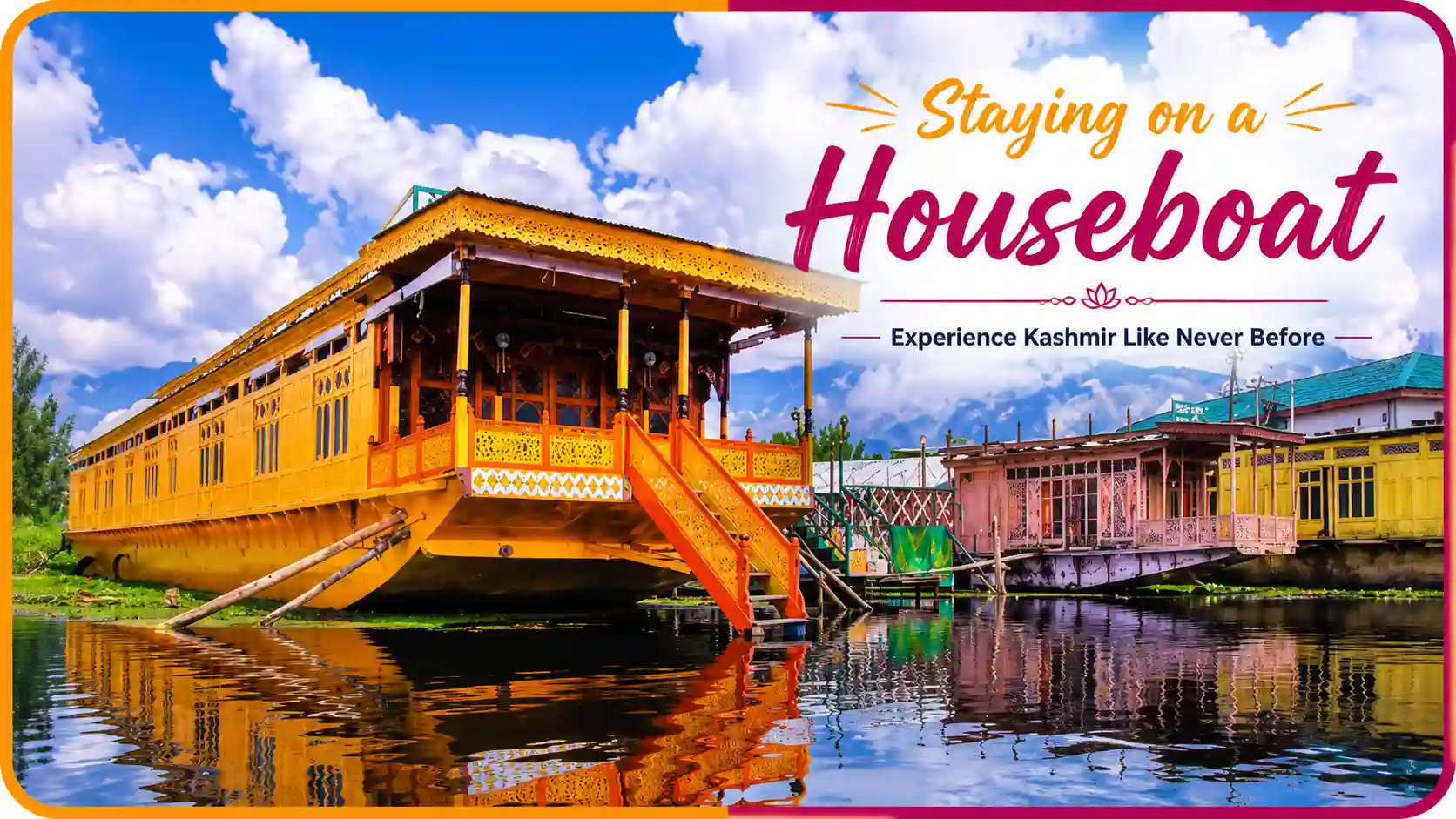
Booking a houseboat on Dal Lake means sleeping inside a hand-carved wooden suite that floats on the water, accessed by a short shikara ride from the bank. Houseboats range from simple single-room units to deluxe carpeted suites with private sit-outs, and almost all include meals cooked on board.
Here's what we tell our guests before they check in:
If you're booking hotels instead of a houseboat, we've covered nearby options in our guide to budget hotels in Srinagar near Dal Lake.
Shikara Rides on Dal Lake: Routes, Price & Tips
A shikara ride is a 1–2 hour paddle-boat tour of Dal Lake covering the floating gardens, Char Chinar island, and the houseboat colony, usually priced per boat rather than per person. Rates are negotiable and depend on the route length, so it's worth confirming the route and duration before you board.
What to expect on a typical ride:
Our honest tip: book your shikara through your hotel, houseboat owner, or tour operator rather than directly at the ghat. Rates are more consistent, and you avoid the haggling that catches first-time visitors off guard.
Best Time to Visit Dal Lake
The best time to visit Dal Lake is between March and November, when the weather is pleasant for shikara rides and the floating gardens are in bloom. July and August bring the lotus flowers into full bloom, while winter (December–February) is for travellers who want to see the lake partly frozen rather than enjoy a boat ride.
For a month-by-month breakdown of the whole Valley, see our guide on the best time to visit Srinagar.
How Deep Is Dal Lake, and Other Quick Facts
Dal Lake reaches a maximum depth of around 6 metres in the Nigeen basin, while most of the lake is far shallower, averaging just 1.5–2 metres. This shallow depth is exactly why you'll rarely see motorboats on Dal Lake — shikaras and houseboats are suited to the lake's flat, weed-covered bed.
Quick reference:
| Fact | Detail |
|---|---|
| Surface area | ~18 sq km |
| Shoreline length | ~15.5 km |
| Maximum length | 7.44 km |
| Maximum depth | ~6 metres |
| Basins | Gagribal, Lokut Dal, Bod Dal, Nagin |
| Located in | Srinagar, Jammu & Kashmir |
How to Reach Dal Lake
Dal Lake is inside Srinagar city, so reaching it is straightforward by taxi, auto-rickshaw, or as part of any Srinagar sightseeing package. If you're arriving by air, the drive from Srinagar Airport takes roughly 20–25 minutes depending on traffic. For exact fares and route options, check our dedicated guide on Srinagar Airport to Dal Lake taxi fare.
Frequently Asked Questions
Is Dal Lake natural or man-made?Dal Lake is a natural lake, fed mainly by mountain streams including the Telbal Nallah, though centuries of human settlement, gardens, and floating agriculture have reshaped its banks and basins. How many days do you need at Dal Lake?
One night on a houseboat plus one morning shikara ride covers the highlights comfortably — most travellers pair this with a half-day visit to nearby Mughal gardens like Nishat Bagh and Shalimar Bagh. Is it safe to swim in Dal Lake?
Swimming isn't recommended in most parts of Dal Lake due to weed growth and boat traffic; a few designated houseboats near Nigeen offer supervised swimming with diving boards instead. Can you visit Dal Lake in winter?
Yes — winter visits trade boat rides for snow-covered banks and occasional lake-edge freezing, making it a quieter, more atmospheric season for photography rather than water activities. Do houseboats have electricity and Wi-Fi?
Most Deluxe and A-class houseboats on Dal Lake have 24-hour electricity and basic Wi-Fi; lower-grade houseboats may have limited power hours, so confirm this while booking if it matters to you.
How to Plan Your Dal Lake Houseboat Stay: Step-by-Step
Dal Lake photographs beautifully, but the real value is slower than a photo: the floating market opens before sunrise, the houseboat owners often run their boats as multi-generational family businesses, and the gardens around the lake were laid out over 400 years ago under Mughal rule. We'd rather you spend one full day here than rush through it between two other stops — that's the one piece of advice almost every guest tells us they wish they'd taken seriously.
According to the Government of India's official tourism portal, Dal Lake remains central to both Srinagar's tourism economy and its local fishing and floating-agriculture livelihoods — which is part of why the experience feels lived-in rather than staged for visitors.
About the AuthorThis guide is written by the travel desk at Namastey Yatra Travels, a Kashmir-focused tour operator that has planned and operated houseboat stays, shikara rides, and Srinagar itineraries for travellers across India. Our recommendations come from direct experience coordinating these bookings on the ground in Srinagar, not from second-hand research. For a tailored Kashmir itinerary, reach out to our team directly through namasteyatratravels.com.